
The growth of a strong culture of literary criticism is an important sign of a healthy intellectual tradition. Literature does not thrive only through writing, but also through the ways it is questioned, interpreted, and discussed. It is within this space of engagement that The Nigerian Review defines its purpose.
The works in this edition reflect the careful and thoughtful criticism needed for the development of literary culture. Although Nigerian literature has gained global recognition over the years, it remains important to continue interpreting and questioning these works. Through such efforts, readers can better understand literary texts and the cultural, philosophical, and historical ideas that shape them.
The critical essays engage with a range of subjects, including media theory, artificial intelligence in African contexts, postcolonial thought, feminist debates, and changing approaches to literary and cultural interpretation. Despite these differences, they share a common goal: to think critically, engage seriously with ideas, and question established views.
A key strength of this collection is its focus on issues of representation and knowledge. Some contributors revisit well-known theoretical frameworks, such as postcolonial and feminist thought, to examine their relevance in today’s context.
This collection also places strong emphasis on African and Nigerian realities. At a time when many global discussions are fashioned by Western perspectives, these works centre African experiences and ideas, showing how such concepts function within our own societies and traditions.
As the editor in chief, I am pleased to present this collection of reviews, which meditates on the value of careful thought and critical engagement. It is my hope that these reviews will encourage readers to think deeply, ask questions, and contribute to the continued growth of our literary and intellectual traditions.
Works In This Issue:
- In Adeleke Babatunde’s “Origami”, Looking Forward Is Looking Backward | Nket Awaji (Book Review)
- Experimentation to Assuredness: The Poetry of Denja Abdullahi | Tunde Olusunle, PhD (Book Review)
- The Human Beings in Noah Ebije’s Mosquitoes Sucked Their Blood for Five Years | Stephen Adinoyi (Critical Essay)
- The Canard of Demystifying Emerging Media | Okhueleigbe, Osemhantie Amos (Critical Essay)
- Reflection on Grief-Themed Poems: A Litmus Test on Contemporary Nigerian Poets | Ojo Olumide Emmanuel (Critical Essay)
- Rethinking Feminism Through a Revolutionary Reading of Zaynab Alkali’s Invisible Borders | Ojone Rosemary Ajibogwu (Critical Essay)
- Voices of Change: Literature as a Catalyst for Social Change in Nigeria | Prof. Solanke, S. O. (Critical Essay)
- Of Many Roads: A Review of Chigozie Obioma’s The Road to the Country | Marvel Chukwudi Pephel (Book Review)
- Revisiting Edward Said’s Orientalism: Power, Representation, and Contemporary Relevance | Ojone Rosemary Ajibogwu (Book Review)
- The Beauty of Bereavement in Adamu Y. Abdullahi’s The Rainbow is Not as Beautiful as My Ruins | Linda Jummai Mustafa (Book Review)
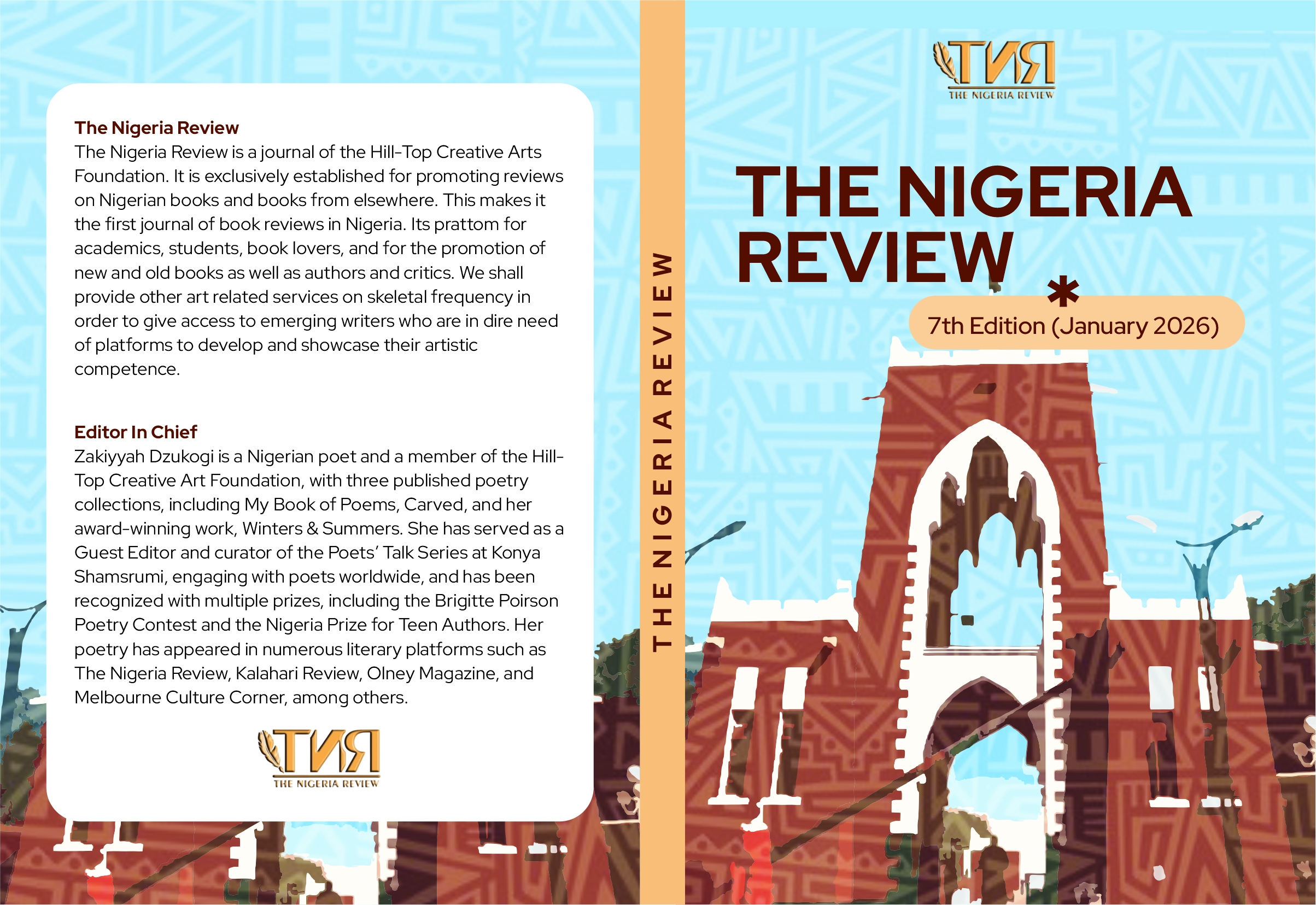
Zakiyyah Dzukogi is a Nigerian poet and a member of the Hill-Top Creative Art Foundation, with three published poetry collections, including My Book of Poems, Carved, and her award-winning work, Winters & Summers. She has served as a Guest Editor and curator of the Poets’ Talk Series at Konya Shamsrumi, engaging with poets worldwide, and has been recognised with multiple prizes, including the Brigitte Poirson Poetry Contest and the Nigeria Prize for Teen Authors. Her poetry has appeared in numerous literary platforms such as The Nigeria Review, Kalahari Review, Olney Magazine, and Melbourne Culture Corner, among others.